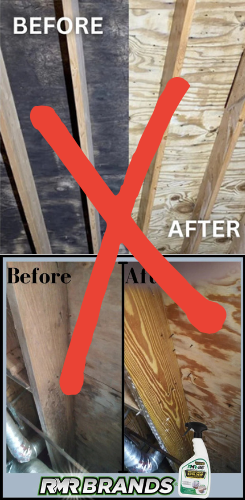
What We Don’t Do
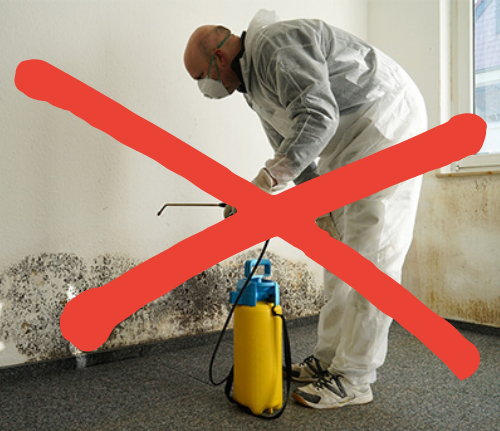
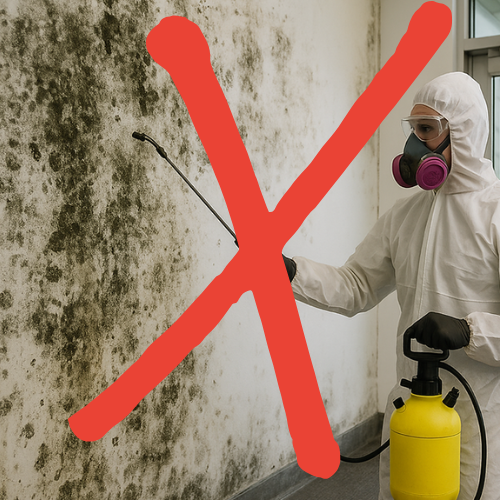
Antimicrobials have great PR. Suffering people are looking for relief. Antimicrobials are used to offer a quick cure. It sounds amazing! They just aren’t effective though. They don’t remove mold nor address root causes. Sometimes it can even make the issue worse.
Mold cannot simply be “killed” and forgotten. Even when mold growth is treated with chemicals or antimicrobials, the physical mold structures, fragments, and the mycotoxins they produce remain in the environment. According to guidance from the U.S. Environmental Protection Agency, mold spores are always present indoors and will regrow when moisture conditions return. Educational resources such as the Change the Air Foundation further explain that dormant mold become active again if conditions allow, sometimes creating renewed exposure even after surface treatments. For this reason, effective remediation focuses on physical removal, moisture control, and detailed cleaning, rather than attempting to chemically “kill” mold and leave it in place.
What Is A Mycotoxin?
Mycotoxins are toxic chemical compounds produced by certain types of mold as a byproduct of their metabolism. Some of them are cancerous but all of them are harmful toxins. Unlike mold itself, mycotoxins are not living organisms, they cannot be killed with disinfectants or antimicrobials. Once produced, mycotoxins can persist in dust, on surfaces, and within building materials, even after visible mold growth has been treated or becomes inactive. In susceptible individuals, ongoing exposure to mycotoxins may contribute to inflammatory, neurological, respiratory, and immune-related symptoms, which is why effective remediation focuses on physical removal, detailed cleaning, and moisture control, rather than surface-level treatment alone.
Dormant, dead, treated mold can STILL produce mycotoxins!
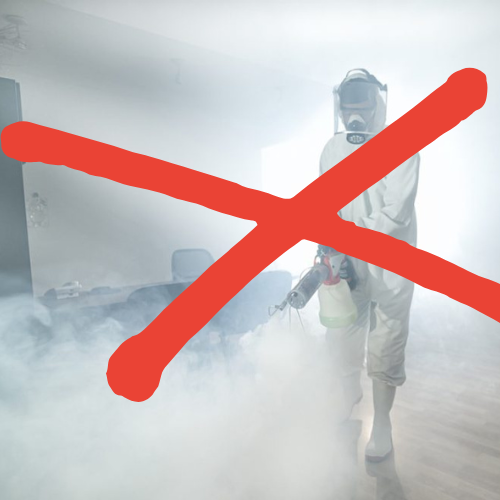
What fogging and gassing do not do:
They do not remove mold or mold-contaminated materials
They do not remove mycotoxins, which are not living and cannot be “killed”
They do not address moisture, which is what allows mold to exist in the first place
They do not penetrate porous materials like wood, drywall, insulation, or dust reservoirs in a meaningful way
Amongst those reasons, we do not fog because introducing more chemicals into the home can cause unintended consequences for sensitive patients. There is no way to predict how these chemicals will react with other chemicals or materials already in home. We have seen several cases here in Franklin, Brentwood, and Nashville where the gassing done for any of these purposes, including odor elimination, has created persisting unintended odors and issues.
Fogging and Gassing?
Mold stain removers improve appearance, not indoor air quality. They lighten or bleach visible staining but do not remove mold structures, fragments, or mycotoxins, nor do they address the moisture issues that caused the problem. There is a time and place for Enzymatic Stain Removal, what we are referring to here is different. Lots of contractors and their employees rely heavily on these stain removers and neglect doing the actual removal.
Again, not to mention adding more chemicals and VOC’s into the home with no real knowledge of how the occupants will react.
Bleaching